
Fossil fuel exposure is geopolitical exposure
A region that imports its energy is a region whose strategic options shrink every time the global oil price moves.
Janus by NavigateX models the solar, wind, and battery system that meets your region's demand at the lowest possible cost, then shows you what to do with the surplus.
Optimized on the technology curves of the day you actually buy, not today's prices.
It assumes stable fossil fuel supply, gradual technology change, and central grid economics that hold for 30 years at a time. None of those assumptions are still true.
A region that imports its energy is a region whose strategic options shrink every time the global oil price moves.
Every year, the cost curve of solar, wind, and batteries falls further below the lifetime operating cost of legacy generation.
The deepest flaw in conventional energy planning is the assumption that the cost of solar panels, wind turbines, and batteries in 2030 will look anything like the cost in 2026. They will not.
Janus produces a full picture of the lowest-cost SWB system for your context. The model is grounded in measured weather data, real demand patterns, and the latest technology cost curves.
Hourly generation modeling for solar and wind based on your location's historical weather, alongside the contribution of any existing assets (nuclear, hydro, biomass). The profile shows when energy is plentiful, when it is scarce, and how that pattern shifts across seasons.
Hourly demand modeling that combines population-level baseload, the electrification of transport, the electrification of heating and cooling, and the industrial loads that matter to your economy. The model accepts your historical data where it exists and fills the gaps with calibrated simulation.
The volume of battery storage required to meet your demand reliably, broken down by daily, weekly, and seasonal needs. The model shows where demand shifting could reduce storage requirements, and where investment in storage delivers the most economic value.
The optimal mix of solar, wind, batteries, and existing assets. The year-by-year capacity additions, costed at the predicted technology prices for the year of each phase rather than today's prices throughout.
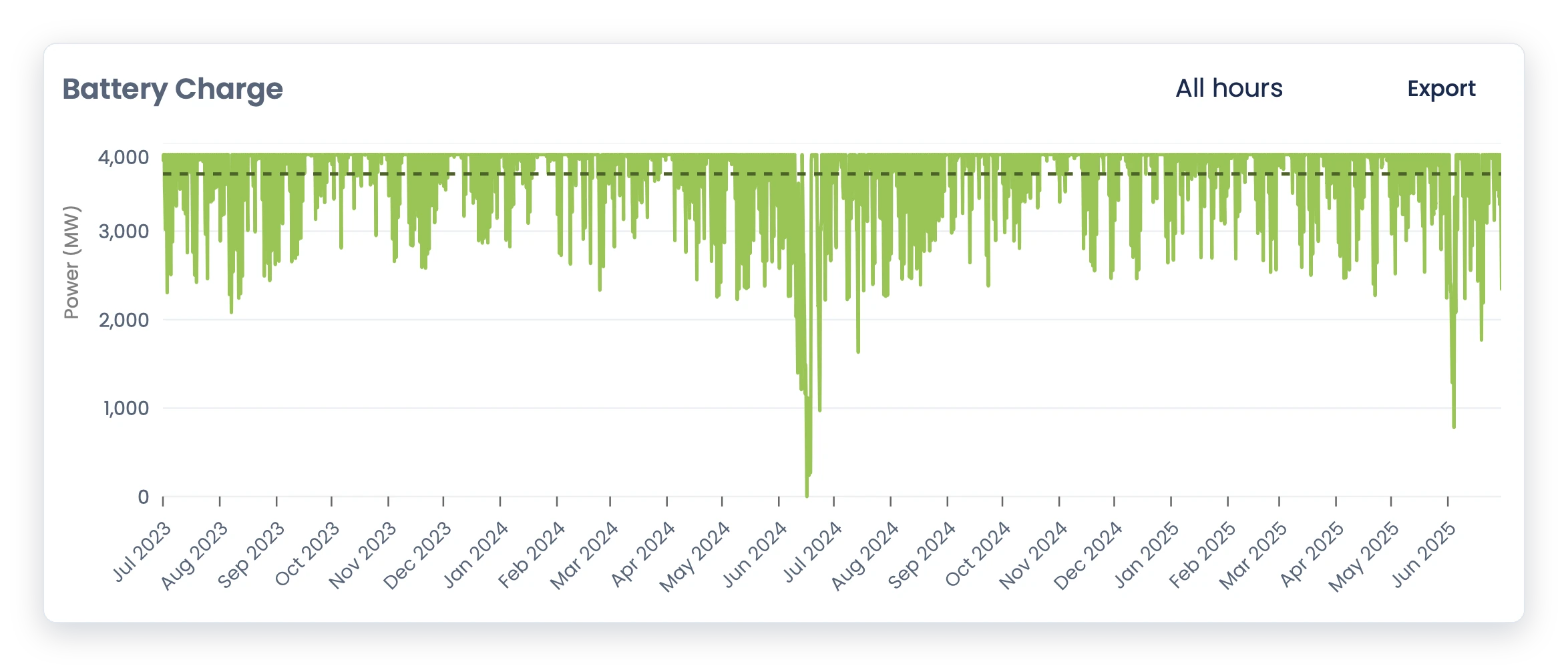
The cheapest way to build a SWB system that meets your region's demand is not to match generation to demand exactly. It is to overbuild generation, because solar and wind output varies and matching the troughs precisely is expensive. The cheapest design routinely produces 2 to 4 times the energy your region actually consumes.
We call that surplus Superpower. Janus models it hour by hour across the year and grades it by how reliable and how concentrated each block of Superpower is. The grades matter because different uses of energy demand different reliability profiles.
Sell Superpower into adjacent grids or directly to commercial buyers. Janus models pricing tiers and revenue projections under different selling assumptions.
Co-locate the industrial processes that need cheap energy, water, and heat, and feed them with Superpower: data centers, precision fermentation, desalination, vertical farming, mineral refining. The economics flip from selling kilowatt-hours to selling what abundant energy lets you produce. We call these Killer Combos, and Janus models them for a region or a site on the same engine as the Energy Audit.
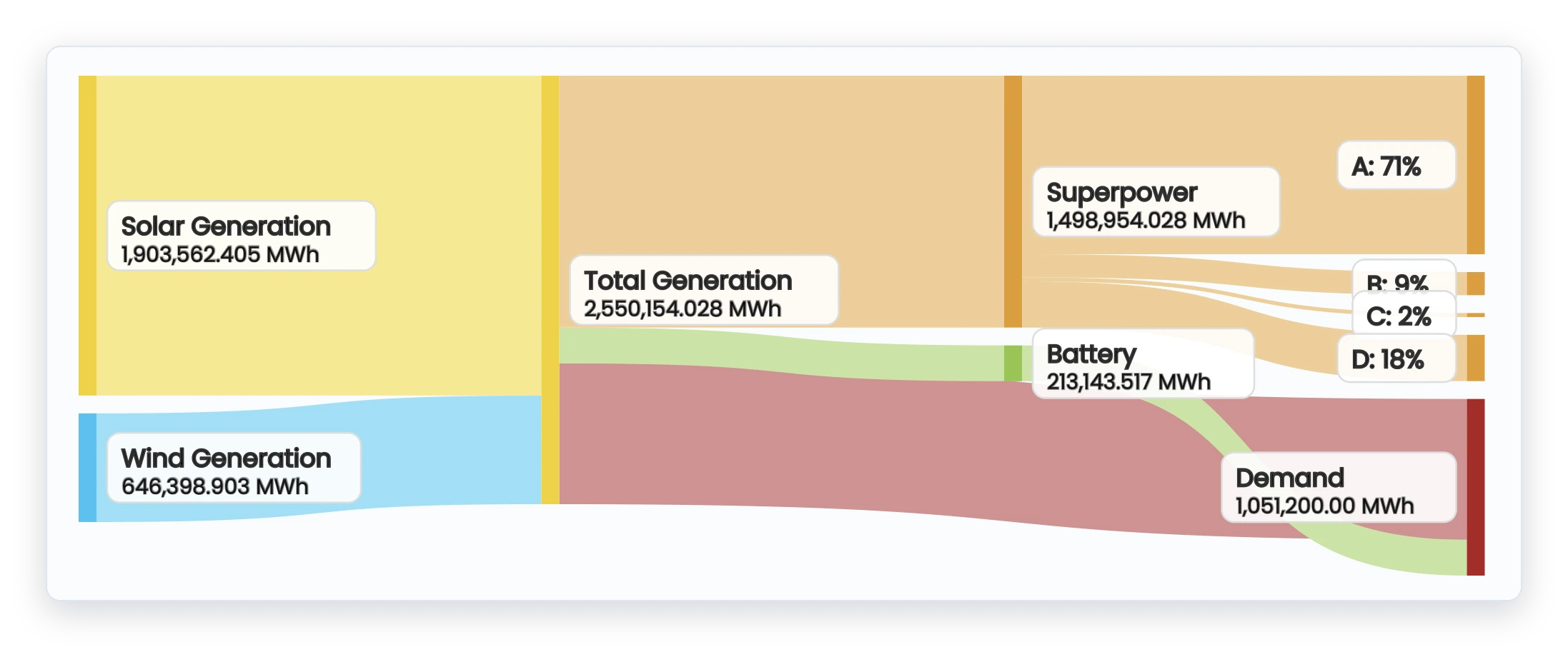
Three patterns show up most often.
Own the supply chain underneath every supply chain.
Energy is the supply chain underneath every other supply chain. For developing economies the leapfrog is structural: less legacy infrastructure to defend, more freedom to build the cheaper system first. An Energy Audit maps the system, the surplus, and the moves to make first.
A structural cost advantage your competitors cannot copy.
If your business consumes large amounts of energy, sovereign SWB is the structural cost advantage your competitors cannot copy. An Energy Audit identifies your transition path, the Superpower available to you, and the new business models the surplus opens up.
Firm 24/7 power and abundant cheap surplus, from one system.
Compute is the application that needs firm 24/7 power and the application that benefits most from abundant cheap surplus. An Energy Audit models the total cost of ownership against grid-supplied alternatives and identifies the Killer Combos that turn your waste heat and your Superpower into additional revenue streams.
The Audit is the managed engagement that takes your context, runs it through Janus, and gives you a strategic answer your board can act on.
Your location and any geographic constraints. Your demand profile if you have it, or the population and industrial data we need to model it. The existing energy assets you operate or own.
Configure the Janus environment for your region and operation. Run the full SWB optimization: generation, demand, storage, build-out, capex. Quantify and grade your Superpower.
An expertly configured Janus environment your team operates day-to-day. A board-ready strategic recommendation with the scenario analysis, financial models, and narrative behind it. The modeling engine is yours to run after setup: your team re-runs it and updates it without coming back to us.
A demo is 30 minutes on your own questions. We show you what Janus makes of your region or operation.